
Can you see the truth?
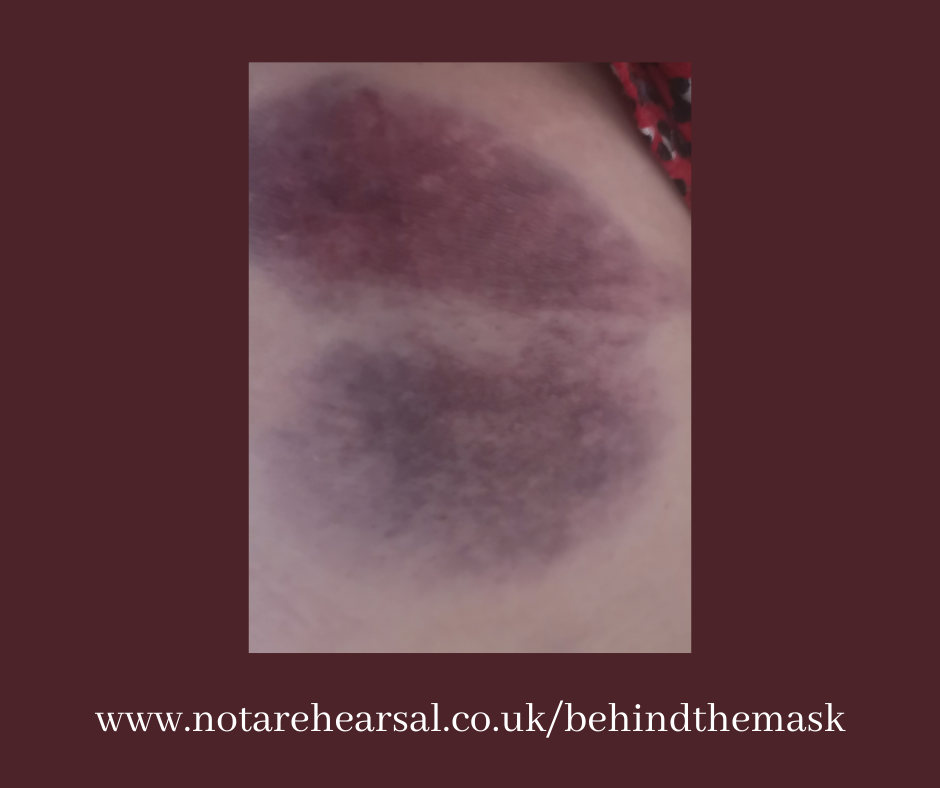
 Bruises.
What story do they tell?
In my early days of talking about domestic abuse, people would always cite bruises as an indicator that abuse had taken place. But what if there are no visual clues?
I didn’t know I was in an abusive relationship until a policeman pointed it out to me. This was 5-years after I had left the relationship and was still getting hassle from the perpetrator. Even then, I didn’t believe it was abuse, I just thought it was a ‘normal’ acrimonious separation involving a child. Because to me it was normal, so I accepted it.
Many of my clients tell me about what is going on their relationship and I occasionally have cause to suggest to them that theirs is an abusive relationship. Usually their first response is ‘but he doesn’t hit me’.
We talk about it further and I explain that words and actions can be equally as damaging as physical violence.
Over time, I help them work out what they want to do in the future; some choose to leave the relationship, others choose to stay and develop coping strategies. It is always my clients’ decision and I support her appropriately. If however, I truly believe she is in danger, then I will intervene.
Over time we work together to fix those unseen bruises, the aches and pains that no-one else knows you carry around day after day, hiding them Behind the Mask.
Stepping Behind the Mask is scary, you never know quite what you’ll uncover. But when you know the underlying cause of any symptoms, you can start to fix them.
The bruise in the photo is of my hip. I was recently knocked off my bicycle by a car. That bruise and a bent and twisted bike are the only visible signs of the accident. It doesn’t mean that I don’t have damage and pain in other areas of my body.
Next time you ponder about your relationship, think about more than what you and everyone else can see. Download my e-book that tells my story about what it’s like living Behind the Mask: “Whatever it takes: Living with Leaving and Surviving Psychological Abuse”