
When You Stop Fighting to Be Seen: Belonging, Identity and the Courage to Grow
 Sometimes the greatest change isn’t becoming somebody new. It’s finding the confidence, and perhaps the right environment, to become more fully yourself.
There’s a particular kind of exhaustion that comes from constantly trying to prove where you belong.
Not necessarily because anybody has explicitly told you that you don’t.
Sometimes the pressure is much quieter than that. You find yourself explaining your experience. Justifying your ambitions.
Adjusting how you present yourself depending upon the people in the room.
Emphasising one part of your identity while quietly putting another to one side.
And eventually, you can become so accustomed to doing it that you barely notice the effort involved.
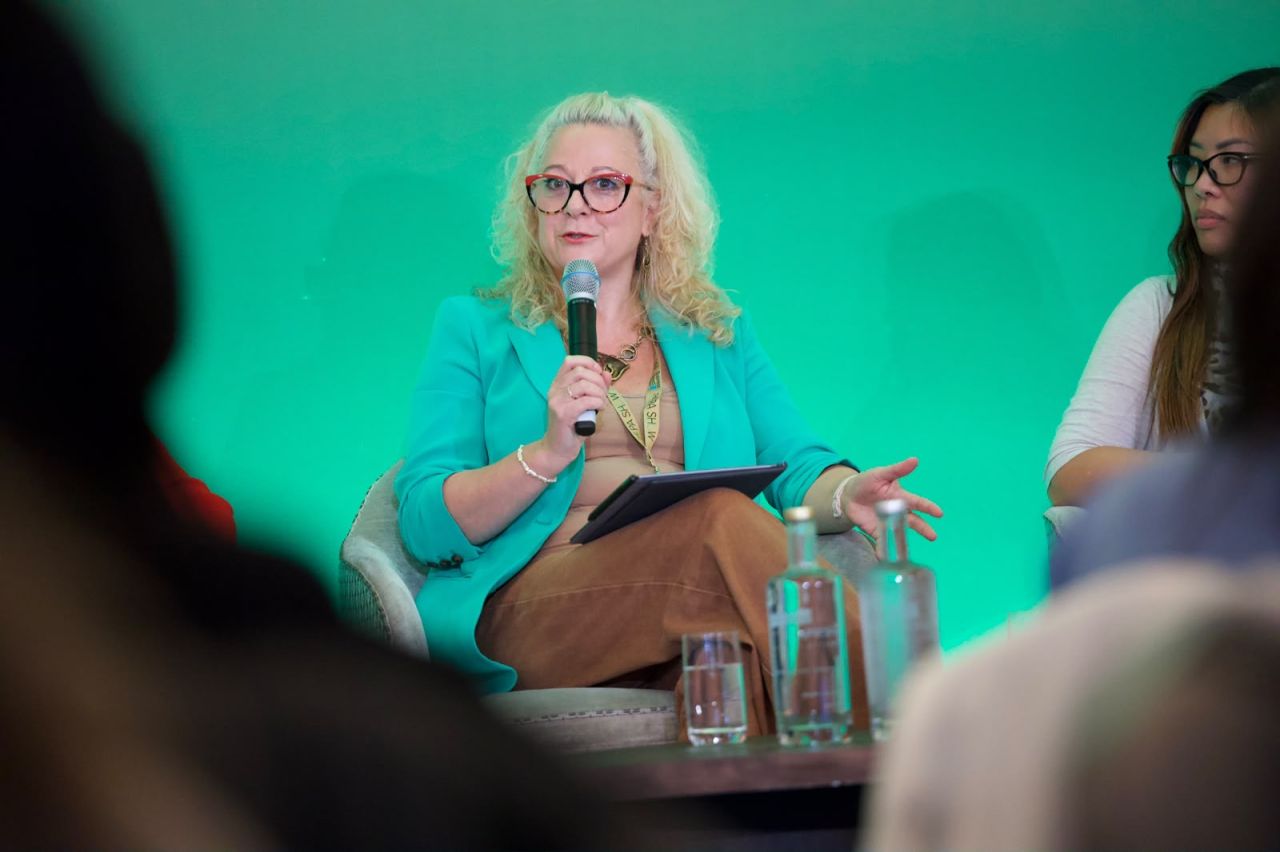
I’ve been thinking about this following a professional event where I experienced something rather unexpected.
I didn’t feel as though I had to fight to be seen or heard. I simply felt that I belonged.
And it made me realise just how much energy we can spend trying to earn a place that perhaps shouldn’t require quite so much proving.
The identities we learn to carry
I’ve spent more than 35 years working as an Executive Assistant.
It’s a profession I’m enormously proud of. It has given me extraordinary opportunities to work alongside senior leaders, understand complex organisations, develop teams and contribute to decisions that matter.
But it isn’t the only thing I am.
I’m also a coach.
An author.
A speaker.
An entrepreneur.
And a woman whose personal experiences have shaped how I understand resilience, confidence, choice and self-leadership.
For a long time, I’ve sometimes felt that these different identities didn’t sit particularly comfortably together.
In a corporate environment, my entrepreneurial interests could make me feel a little different. In entrepreneurial spaces, my corporate career could make me feel equally unusual.
Neither part was false. Both were genuinely me.
But there were occasions when I felt I needed to emphasise one instead of the other to make myself understandable to the people around me.
I wonder how many other capable professional women recognise that feeling.
Perhaps you’re the senior leader who also wants to pursue something creative. The dependable professional who longs for a different pace. The woman who has built a successful career but increasingly feels there are other parts of herself asking for attention.
Or perhaps you’re simply tired of being known for one particular thing when you know there’s considerably more to you.
Being capable doesn’t mean being one-dimensional
One of the ideas I’ve explored extensively through my work is the identity of being the capable one.
- The person who handles things.
- The person people rely upon.
- The one who can be trusted to make everything work.
That identity can be enormously rewarding. It can also become surprisingly restrictive.
Because when people become accustomed to a particular version of us, we may begin to feel obliged to keep presenting that version.
- The capable EA.
- The sensible manager.
- The supportive partner.
- The strong woman.
- The person who never seems to struggle.
But people aren’t job descriptions.
And we aren’t obliged to remain exactly as others have always known us.
We can be highly competent professionals and still be curious about entirely different possibilities. We can enjoy our careers while wanting to explore something beyond them. We can be confident in one environment and feel uncertain in another.
None of those things makes us inconsistent. They make us human.
The problem begins when our identities stop describing who we are and start dictating who we’re allowed to become.
The difference between proving and contributing
This is the distinction I’ve found myself returning to.
There’s a difference between entering a room determined to prove you deserve to be there and entering a room ready to contribute what you know.
The first can make us hyperaware of how we’re being perceived.
- Am I experienced enough?
- Do I sound credible?
- Will people take me seriously?
- Should I mention this part of my background?
- Will they understand what I’m trying to say?
The second creates room for something different.
Curiosity.
Conversation.
Connection.
The confidence to share a perspective without needing everybody to agree. The freedom to listen rather than constantly prepare your next justification.
And perhaps, most importantly, the ability to enjoy the experience.
Of course, belonging isn’t always immediate.
Sometimes we have to develop relationships. Sometimes we need to challenge assumptions. And sometimes we’re contributing something new to a profession or environment that hasn’t yet caught up with the possibilities.
I’m not suggesting we abandon every space where we feel uncomfortable. Growth can be uncomfortable.
But there’s a difference between the discomfort of learning something new and the exhaustion of constantly feeling that we must justify our existence.
Recognising that difference is an important act of self-leadership.
Change doesn’t always mean leaving
When we talk about personal growth, there’s often an assumption that something dramatic needs to happen.
- A new career.
- A new relationship.
- A completely different life.
- A grand announcement that everything is about to change.
And sometimes those decisions are entirely appropriate. But not every period of growth requires a dramatic departure. Sometimes it begins with allowing yourself to speak more openly.
- To express an interest you’ve previously kept quiet.
- To apply for an opportunity that feels slightly beyond your current experience.
- To develop a new skill.
- To make a different decision about how you use your time.
Or simply to stop apologising for the fact that you have more than one ambition.
The important thing is recognising that we have choices. And that the person we were five or ten years ago doesn’t have to dictate every decision we make today.
Be More Tree
Something from an old drama class recently resurfaced in my thinking.
Three words. Be More Tree.
And, despite my tendency to find an entirely unreasonable number of metaphors in everyday life, this one has stayed with me. 😂
A tree changes constantly. It grows in different directions. It responds to its environment.
It experiences seasons of extraordinary growth and periods where very little appears to be happening.
It sheds.
It adapts.
And yet it remains recognisably itself.
I think there’s something useful in that.
We often approach change as though we must choose between remaining who we are and becoming somebody different.
But perhaps that isn’t the choice at all.
Perhaps growth is about becoming more fully ourselves. Not discarding our experience, but building upon it. Not rejecting our past, but recognising what it has taught us. Not trying to become the person we think others expect, but developing the confidence to explore who we might choose to be.
What if you stopped fighting?
There’s a question I’ve been sitting with.
How much of our energy goes into trying to prove that we belong?
And what might become possible if some of that energy were available for something else?
For learning.
Creating.
Connecting.
Speaking.
Taking opportunities.
Enjoying our achievements.
Or simply being present in the lives we’ve worked so hard to build.
For women who are accustomed to achieving, coping and holding everything together, that can be an unfamiliar idea.
We’re very good at striving.
We can be considerably less comfortable with allowing ourselves to recognise when something is working. We reach the milestone. Then immediately identify the next one.
We achieve the thing we once desperately wanted. Then wonder whether it’s enough.
Perhaps sometimes self-leadership asks us to do something rather different. To notice where we are. To recognise what we’ve already become. And to give ourselves permission to enjoy it.
Because the next chapter doesn’t always begin with a fight. Sometimes it begins with the quiet realisation that we’re finally standing somewhere we feel at home.
And perhaps, for a little while, that’s enough.
A question to take away
Think about the places, people and experiences that allow you to feel most fully yourself.
What changes when you’re there? What do you stop trying to prove? What parts of yourself are you more willing to share?
And what might happen if you began bringing a little more of that version of yourself into the rest of your life?
You don’t need to change everything.
Perhaps you simply need to give yourself permission to grow.